The topic Claude’s real superpower isn’t code — it’s what happens when you add… is currently the subject of lively discussion — readers and analysts are keeping a close eye on developments.
This is taking place in a dynamic environment: companies’ decisions and competitors’ reactions can quickly change the picture.
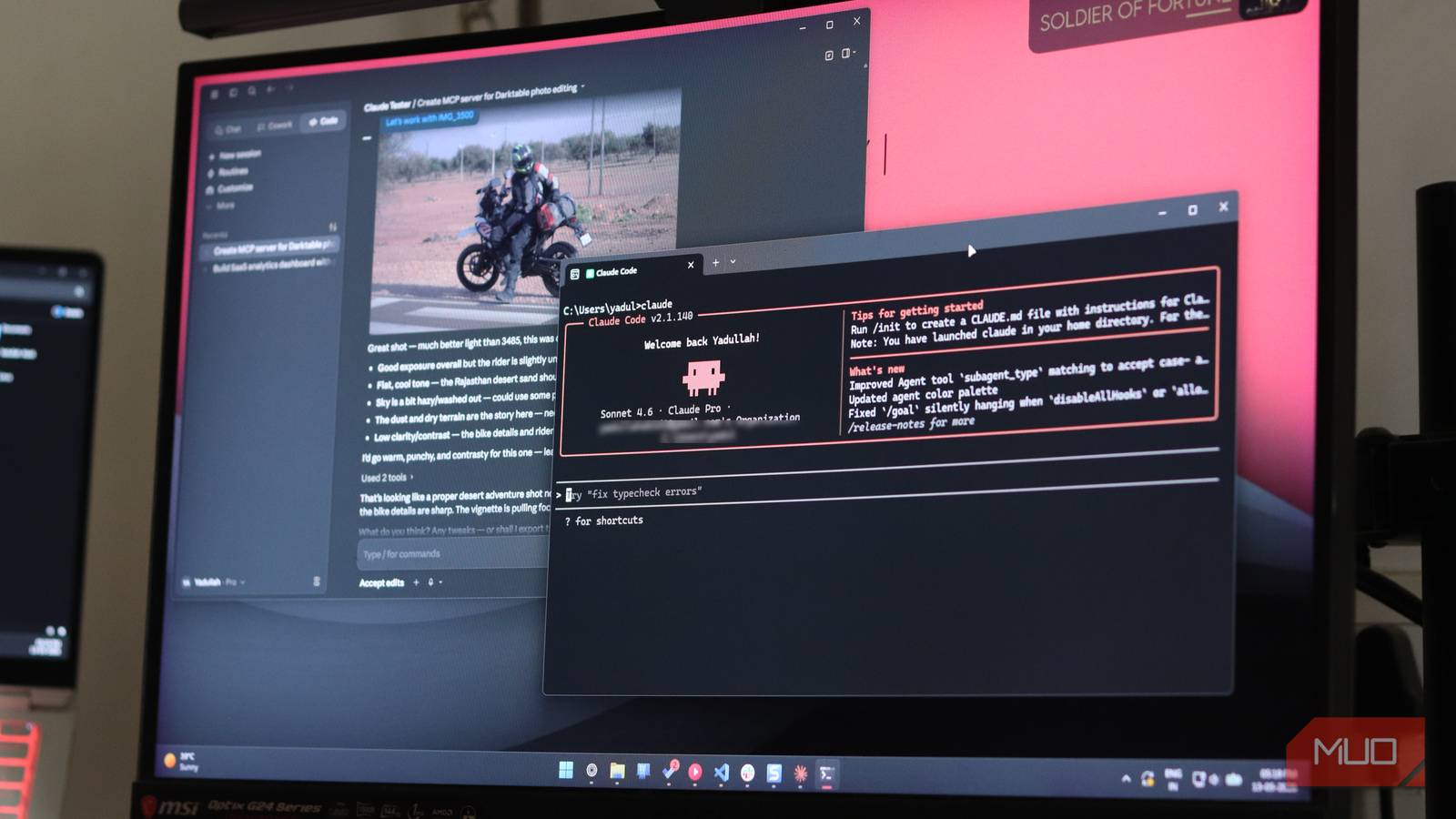
Claude can be a genuinely impressive AI tool, especially if you’re considering Claude Code’s capabilities. But apart from writing code and handling daily conversations, it can do much more as soon as you bring the hundreds, if not thousands, of MCP servers available to you. These servers let Claude talk to external tools and even turn it into a shockingly good photo editor if you use it right.
MCP, or Model Context Protocol, is an open standard that Anthropic released in late 2024. Think of it as a USB connection for AI: one standardized connection type that lets Claude (or any other AI for that matter) plug into databases, web tools, file systems, design apps, and just about anything else you can imagine. The ecosystem has exploded since, and there are tons of MCP servers that make Claude much more useful than it already is.
A new acronym is taking over tech circles. It’s called MCP—and it might just change how you use AI apps.
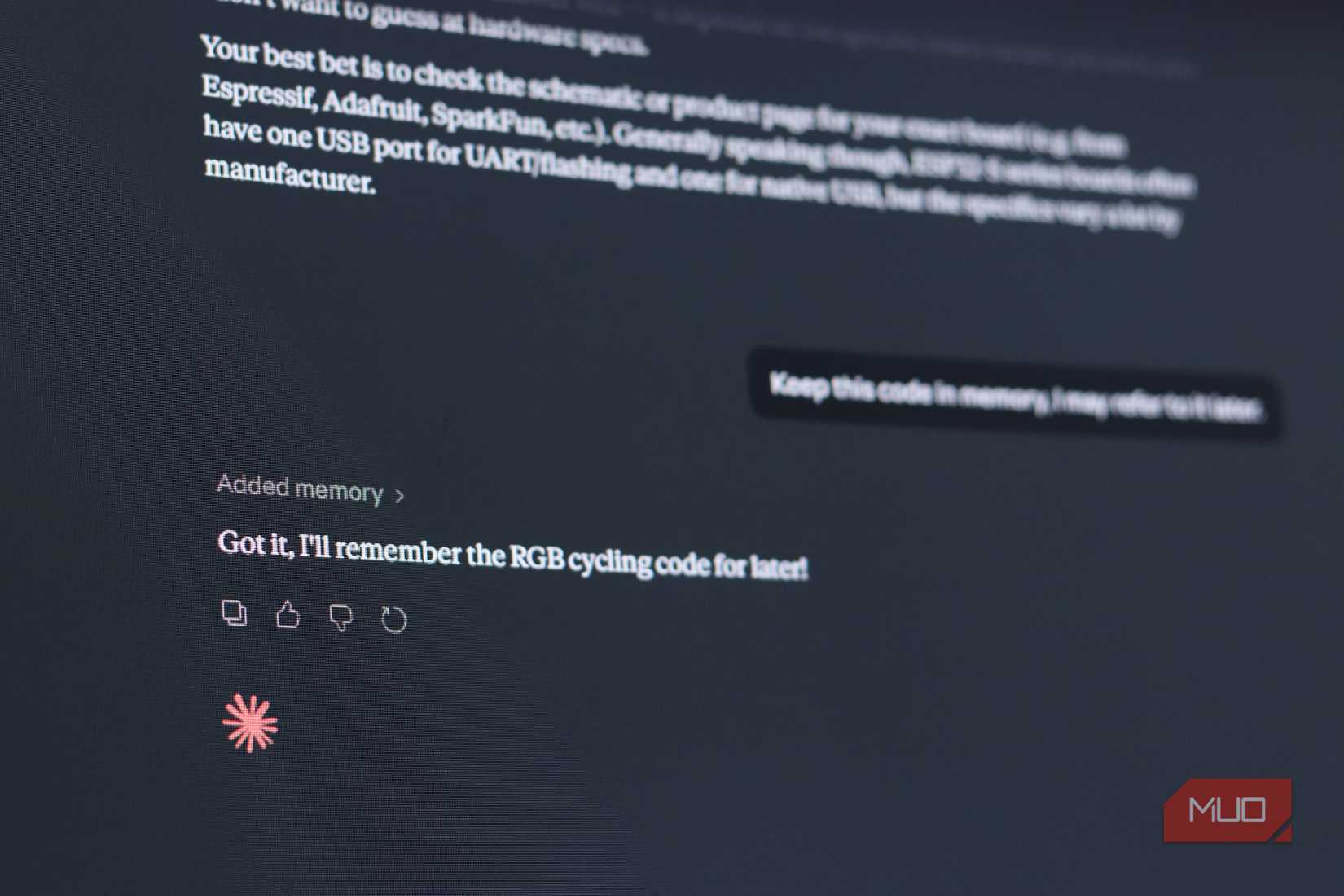
Claude can have memory issues across conversations at times, despite its built-in memory feature rolling out at the time of writing. However, there’s already an MCP server that can fix the issue: Memory Server. It implements a persistent knowledge graph it can read from and write to across sessions, giving Claude persistent memory.
You can tell the AI to remember your preferences, such as using TypeScript over JavaScript, that a particular project uses PostgreSQL, or that you want your responses formatted a certain way, regardless of the conversation. The next time you open a chat, that information is still there, Claude remembers it, and over time, it starts to feel less like a tool you have to constantly re-brief.
The memory data lives on a local file on your machine, which means it stays private and you can clear it whenever you want. It’s one of the official reference servers built by Anthropic and is completely free to run, too.
A basic implementation of persistent memory using a local knowledge graph. This lets Claude remember information about the user across chats.
Every AI chatbot has a knowledge cutoff—a hard stop date in the training data after which the AI’s responses can be confidently wrong. This is especially problematic if you’re working with newer code and libraries that were released after Claude’s cutoff, and that’s exactly what Context7 fixes.
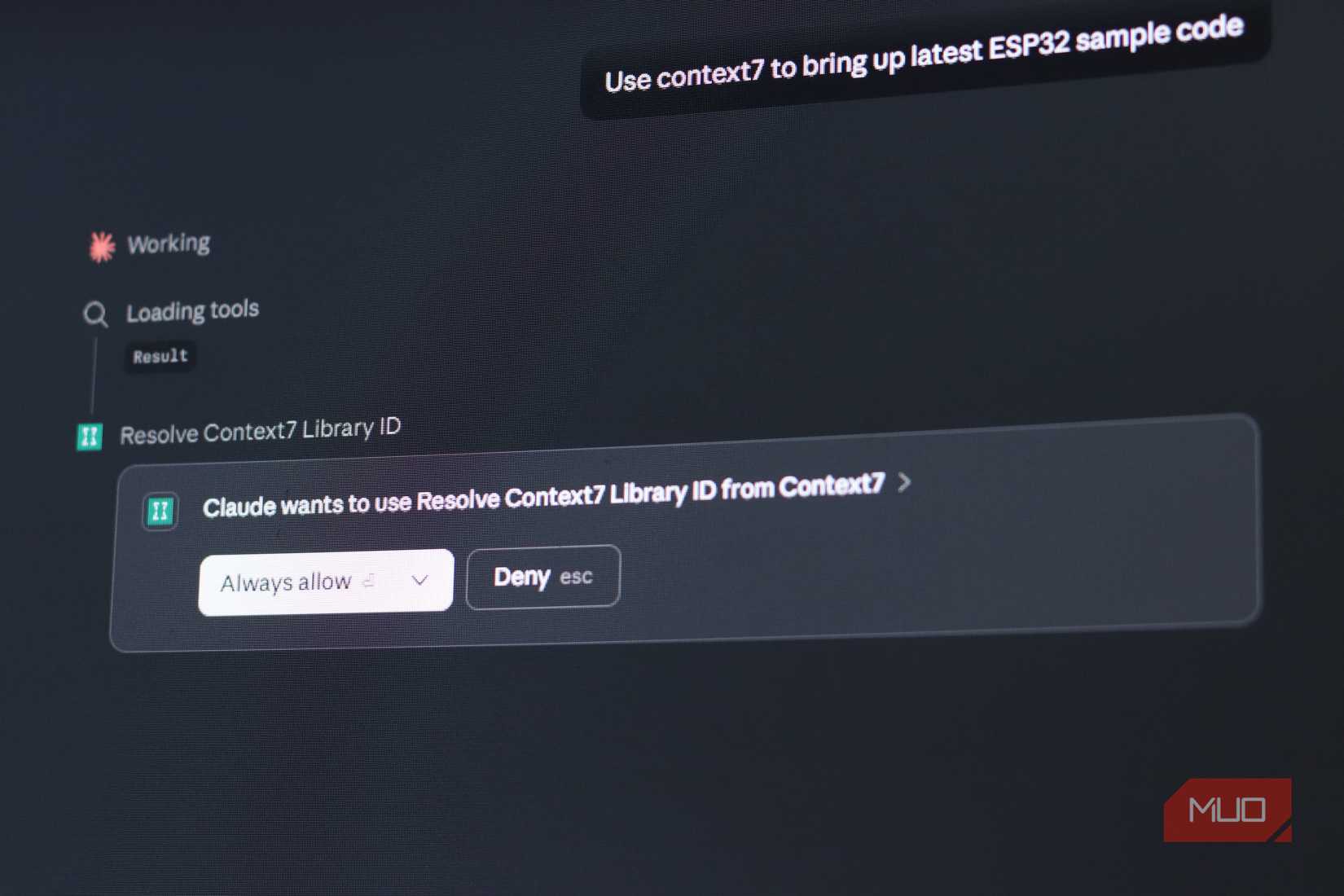
Context7 is an MCP server that fetches live, version-specific documentation for thousands of software libraries the minute you ask your question and injects that data directly into Claude’s context. You don’t even need an API key for this to work, either. Just add use context7 to your prompts, and you’re good to go.
When you’re working with fast-moving frameworks like React or tools in the AI stack that update constantly, this MCP server is a great way to ensure that Claude always works with updated documentation, and by extension, the latest methods.
Up-to-date code documentation for LLMs and AI code editors.
If your file system has gotten out of hand, as it often does for a lot of people, letting Claude clean up your mess is a great way to save both time and storage. Now Claude can work with whatever you paste directly into the chat or the working directory you provide in Claude Code, but with the Filesystem Server, it can read your project files, write new ones, search across directories, and make batch edits—all from plain English instructions.
The server comes with configurable access controls, so you decide exactly what folders Claude is allowed to see and work with. The principle here is simple: most real work involves files, and an AI that can’t touch your files is only half as useful. It’s also a great way to let Claude quickly manage and organize files in a directory that has gotten out of hand over repeated developer test runs or just unorganized data dumping.
Node.js server implementing Model Context Protocol (MCP) for filesystem operations.
If you’re a fan of Brave browser and are frustrated with Claude’s cutoff limitations, the Brave Search MCP will fix that problem. As you can probably guess, this server lets Claude search the web using Brave’s independent search index, meaning no Google tracking and no ad-skewed results.
This is a paid server, but the free tier is enough for most personal use cases. The responses are structured as Claude gets the raw search results and then synthesizes them to give you an answer that combines its own reasoning with current information. You can also pair this with the Firecrawl MCP server to scrape full page content from any URL, effectively giving Claude the ability to do real-time research without switching apps.
An MCP server implementation that integrates the Brave Search API, providing comprehensive search capabilities including web search, local business search, place search, image search, video search, news search, LLM context, and AI-powered summarization.
The Playwright MCP gives Claude a live, controllable browser—Chrome, Firefox, or WebKit—that it can navigate, click through, fill out forms in, take screenshots of, and interact with just like a real user would. In case you’re still wondering, it lets Claude take over your browser and browse the internet the way you would.
You’ll find more use cases for this than you can probably imagine in one go when you start using it. Asking Claude to open my local development server and walk through a form filling up realistic test data and verifying it’s working is one of my favorites. Tasks like this would otherwise be rather tedious by hand; now it’s all one instruction.
The server works with the browser’s accessibility tree rather than raw pixels, which means Claude doesn’t need a vision model to understand what’s on screen. It reads structured element references instead, making interactions faster and more reliable. It also supports persistent sessions, so you can log in yourself and hand control to Claude if you don’t want to share credentials (and you shouldn’t).
An MCP server that provides browser automation capabilities using Playwright.
Using MCP Servers is a great way to extend Claude’s capabilities, especially if you’re already knee-deep into it. None of these servers require any complicated setup, either. They all run through Claude’s desktop using a JSON configuration file, and most can be installed with a single npx command. There’s also a community-maintained awesome-mcp-servers repository on GitHub if you want to discover what else is out there.
ChatGPT is great; don’t get me wrong. But Claude is so much better.
Start with a couple that match your workflow—Memory saver and Filesystem server are good defaults for just about anyone. From there, you can slowly add more MCP servers that fix your particular problems, and before you know it, you’ll have an extremely capable tool on your hands. You can even use these MCP tools with your local LLMs for a more effective offline-first AI experience.
About the Author