The topic I tried to do everything on the TCL NXTPAPER 14, and it turns out it’s really… is currently the subject of lively discussion — readers and analysts are keeping a close eye on developments.
This is taking place in a dynamic environment: companies’ decisions and competitors’ reactions can quickly change the picture.
Looking for a tablet these days is fairly simple: you find the brightest screen, the fastest chip, the lightest or thinnest chassis for the lowest price and go from there. Or you just get an iPad. The TCL NXTPAPER series, here represented by the largest beast in the crew at 14.3 inches, isn’t aiming to be an iPad killer, but rather a tablet that you can look at for hours without your eyes going wonky. Is it the best tablet you can buy for under $500? No, but maybe it doesn’t have to be, if you’re mostly a reader.
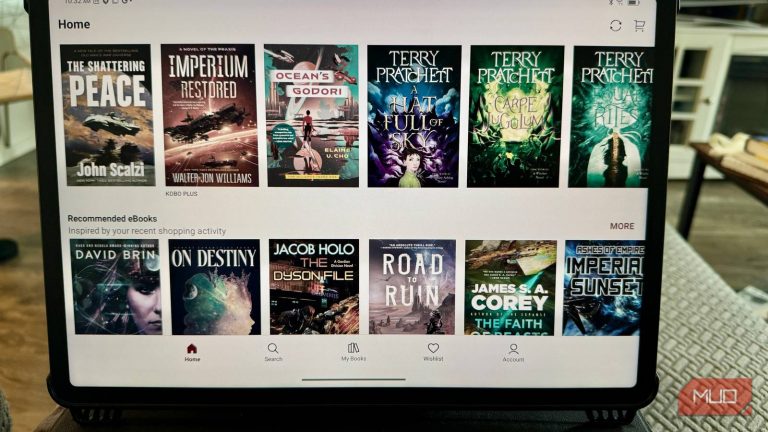
First impression is of a gorgeously huge tablet with rounded corners and a thickness that evokes my older iPad Pro 12.9-inch. The display is gorgeous, and it’s fun to put the NXTPAPER display through its three-option paces: Regular mode, Color Paper mode, and the black and white Ink Paper mode. The Color Paper evokes color e-ink displays, with soft, muted colors and an off-white background for books that keeps the eye strain low. It’s definitely my favorite mode on this device, and I generally keep it there, though TCL thoughtfully included a hardware button to bring up the mode swapping interface, which makes it easy to bounce between modes.
The NXTPAPER 14 came to us with Android 14, a mid-range MediaTek MT8781 chipset, and a Cortex Octa-core CPU up to 2.2 GHz. It’s got a Mali-G57 MC2 GPU and 8 GB RAM (with 8 GB virtual) with 256 GB storage. The 14.3-inch screen has a 2400×1600 resolution at 3:2 ratio, and it runs TCL’s own NXTPAPER 3.0.
TCL provided the NXTPAPER 14 for this review. The company had no input in this article and did not see it before publishing.
The TCL NXTPAPER 14 is a 14.3-inch Android tablet built around one idea: a display that doesn’t destroy your eyes. The NXTPAPER 3.0 screen cuts glare and blue light at the hardware level, and it works — long reading sessions feel genuinely different on this panel than on a standard LCD. The included T-PEN stylus and flip case sweeten a $369.99 price that already includes 256GB of storage. The catch: the T-PEN’s hover detection is too aggressive, creating phantom marks mid-stroke that make natural handwriting a chore. Fix that in firmware and this is a compelling e-reader alternative. As it stands, it’s a great tablet for readers who won’t miss the stylus.
The TCL NXTPAPER 14 is $369 on TCL’s website and currently $339.99 at Amazon (as of this writing). The T-PEN stylus and flip case is included, which seems like an added bonus at first, as most tablets in this price range don’t bundle. There’s only a single configuration with 8GB RAM (plus 8GB virtual), 256GB storage, and the NXTPAPER 3.0 display in a dark gray color. There’s no cellular option here, though.
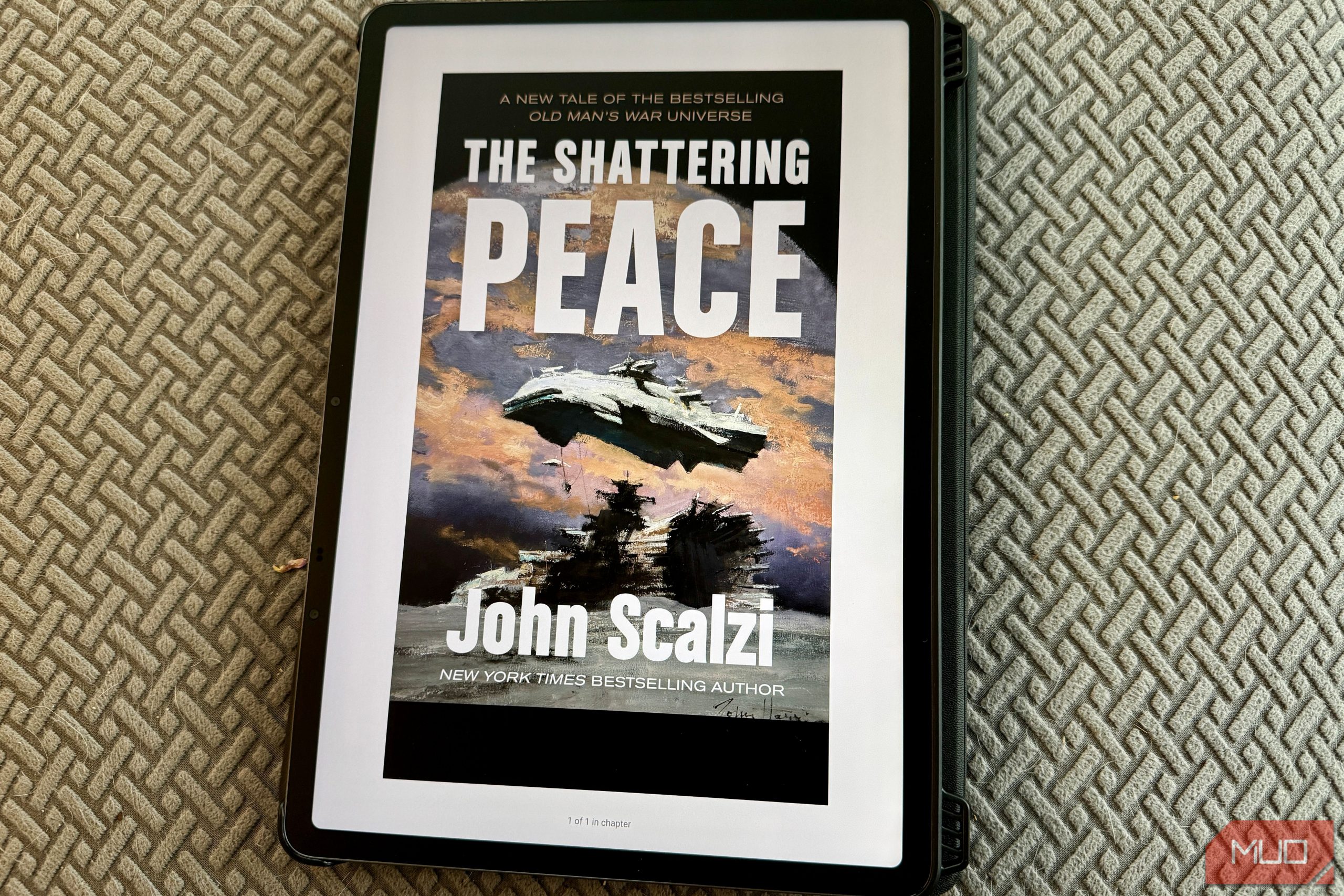
The NXTPAPER 3.0 display is an IPS LCD panel with a nano-material matte layer that’s applied using nano-matrix lithography. That layer diffuses ambient light instead of reflecting it, which eliminates glare without that washed out look most anti-glare films have. Blue light filtering happens at the hardware level, too, with TCL claiming up to 61% reduction in those “keep you awake at night” light waves. DC dimming handles the brightness control, which gets rid of the PWM flicker that causes eye fatigue on most screens over time.
A dedicated hardware NXTPAPER key on the side of the tablet lets you click once to choose the display mode via an on-screen overlay, or you can hold it down to toggle between Regular and Color Paper modes. You can also double click it to get an AI writing assistant that uses TCL AI, which I’m assuming is some sort of proprietary LLM.
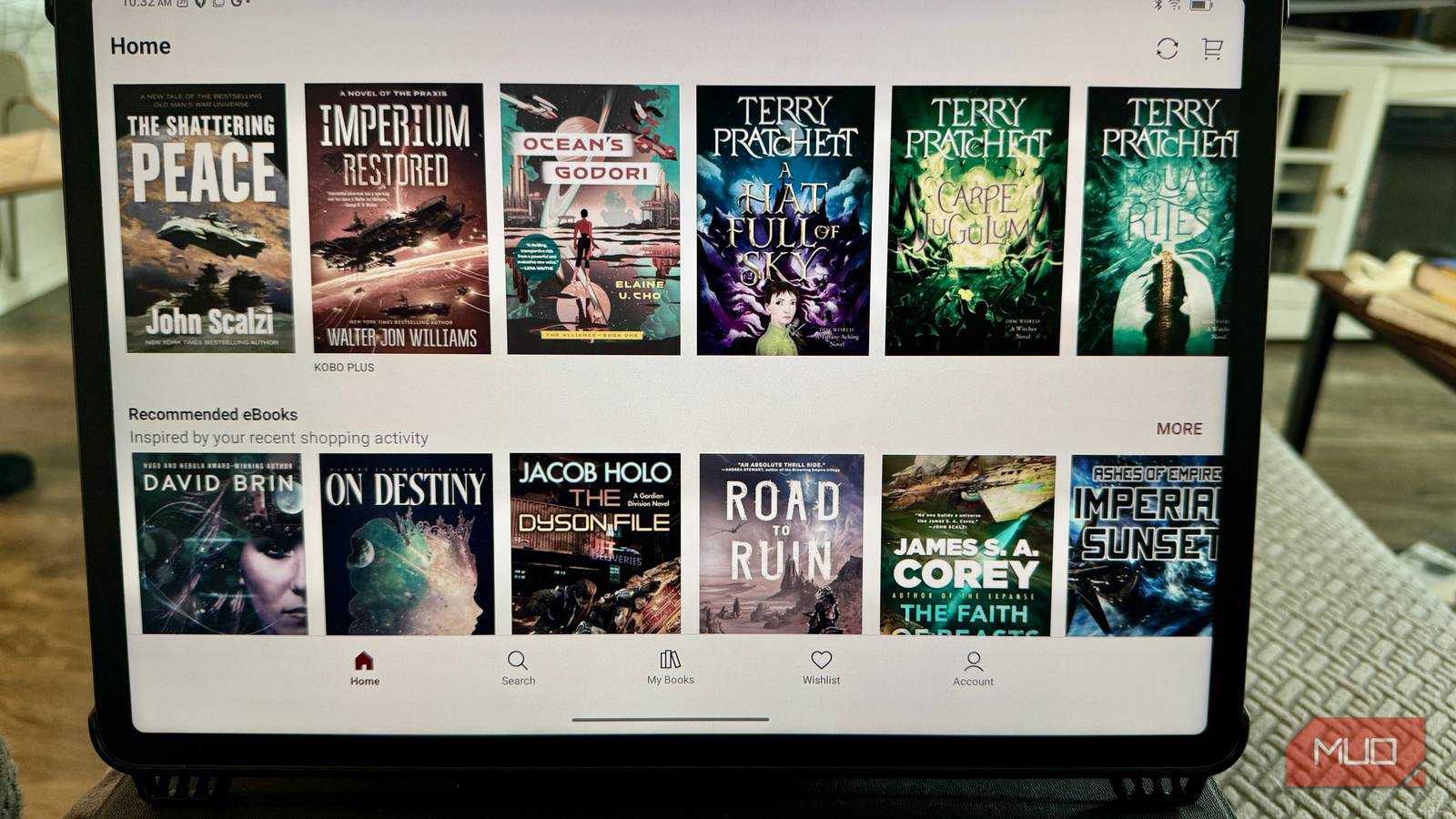
I really like the Color Paper mode and keep the tablet there most of the time. It’s even nice for reading comics, as the slightly muted palette recalls the pulp paper of older comics from before the 1990s. The Color Paper mode is like a slightly sharper version of the color e-ink on my Kobo Clara Colour, so it’s a familiar look and feel. I use the hardware key to switch to Regular mode for things like reading news or the web, and it’s a bright, LCD display for those activities. I don’t tend to drop into black and white e-ink mode, but it’s cool to see how the OS changes the icons to line drawings, reminding me of old icons on older Macs and eWorld (Apple’s ill-fated online community circa AOL).
The 14.3-inch panel display has a decent resolution at 2400×1600, and the 3:2 aspect ration suits documents and web pages better than typical laptop 16:10 ratios. At 202 PPI and 400 nits peak brightness, it works just fine indoors and is bright enough (especially with the matte finish) to use outdoors in fairly bright sunlight.
At 12.69 x 8.74 x 0.28 inches and 1.65 pounds, this is a big piece of hardware, making it closer in footprint to a small laptop than a typical tablet. It’s comfy to use two-handed or propped up with the included folio-style case, but one-handed use for more than a couple of minutes is a chore. It’s easy to slip into my messenger bag, but I’m not using it like a paperback. It’s more of a hardback-style device, and I find myself using it in landscape mode to get two pages up onscreen at a time. Thankfully, the 7mm profile keeps it from feeling too bulky, though it feels solidly built at the same time: not a lot of flex to it.
The tablet has a USB-C port on the bottom and features quad speakers around the chassis. The sound quality is fine, and it produces a decent amount of bass given its size. I didn’t mind watching Netflix on it, either, though I’d recommend not holding it up in bed to watch even a shorter show. There’s no headphone jack, nor any expanding SD card slot, either.
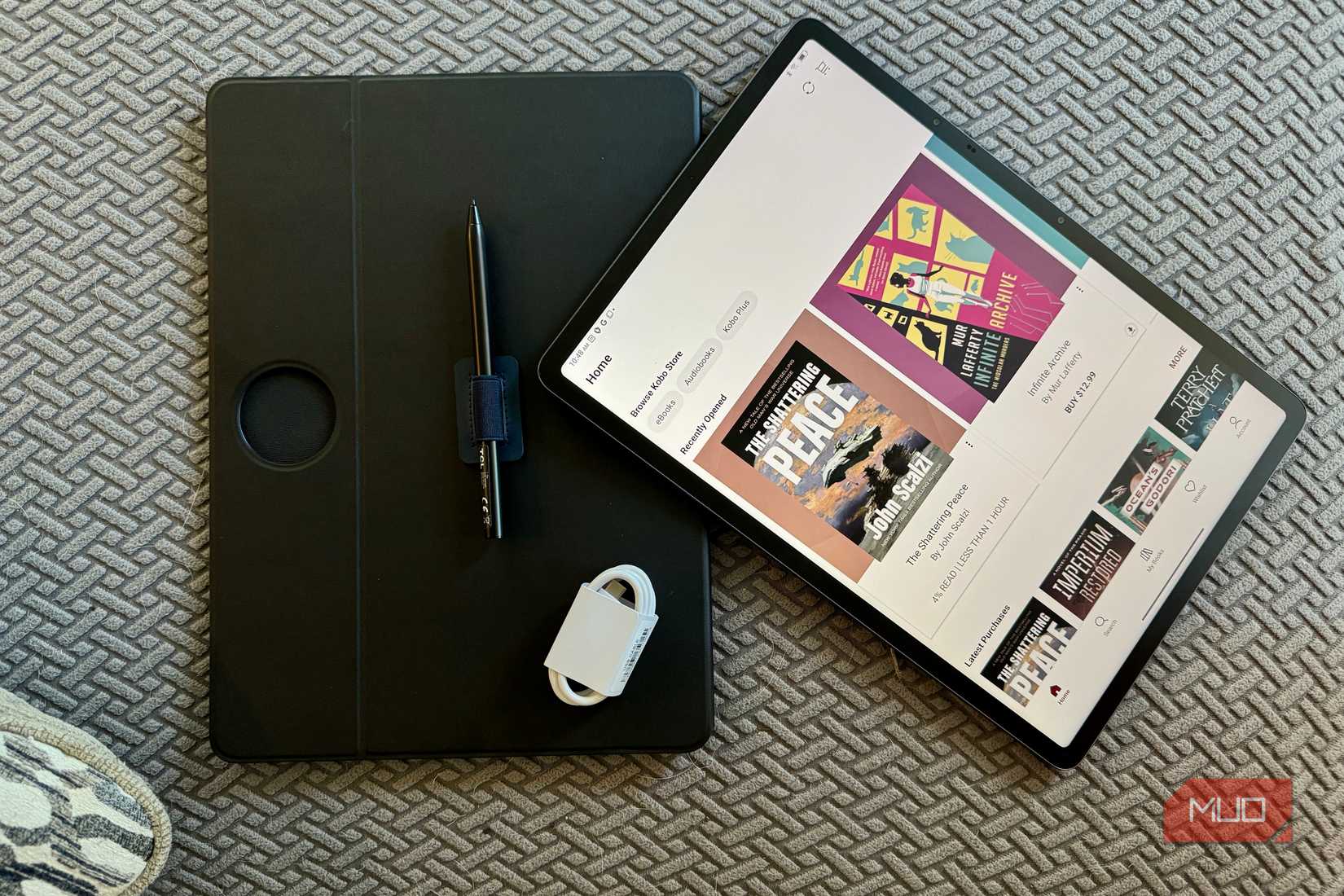
The included flip case doubles as a stand, but is pretty flimsy overall. The front cover doesn’t attach to the tablet on the front, so it ends up flapping around when I pick up the tablet. It also doesn’t origami into anything useful on the back; there’s only one way to use it, and that’s keyboard-style (without the keyboard) to make it look like a laptop. It’s fine, but it’s definitely a bundled accessory.
As a tablet pitched to artists, writers, or note-takers, the T-PEN’s issues are a serious drawback.
Then there’s the T-PEN, which I was fairly excited about. Getting a fully active stylus with 4,096 pressure levels with up to 100 hours of use per charge seemed like a killer deal for a tablet at this price. It even comes with a spare tip and removal tool in case writing and drawing on the matte display surface wears out your nib. The pen has up and down buttons on its body, which are programmable via Settings > Advanced Features > Stylus, and can be set to go back, launch shortcut panels, or the like.
But then I tested the T-PEN with MyScript Notes and Infinite Painter to see how it felt to use. The matte finish definitely helped it feel less like writing on glass (though it’s not 100% like paper, either), which gives it a leg up on a more traditional tablet.
The big problem with the stylus, though, is its aggressive hover detection. The T-PEN registers input before the nib touches the screen, so even just repositioning the pen just above the surface mid-stroke creates phantom marks and unintended lines. Writing and drawing requires you to keep the pen well above the display between strokes, which just kills the natural rhythm of handwriting entirely. As a tablet pitched to artists, writers, or note-takers, this is a serious drawback. Since the T-PEN is an active stylus with its own battery and firmware, though, there’s at least a chance that TCL can fix this via a stylus firmware update in future. And, before you ask, I couldn’t find a single spot in the system or app settings where I could adjust this.
The MediaTek Helio G99 is a 6nm chip that’s been in mid-range Android devices since 2022. For reading, editing or producing documents, email, streaming, and maybe some light illustration (if you go slow with the stylus), it handles everything just fine. It’s much less stuttery than many other tablets I’ve tried in this range, and it launches apps and switches between them easily. The multitasking works well, too, thanks to the 8GB RAM plus virtual expansion, and was able to handle two windows up onscreen at the same time without a problem. Demanding apps, though, and any serious gaming experiences are outside its wheelhouse for sure, and the 60Hz display doesn’t quite manage any fast-scrolling content without some blur. Geekbench 6 puts the CPU at 737 single-core and 2,019 multicore, while the gaming-focused 3DMark Wild Life Extreme score of 347 with an average 2.08 FPS will keep most gamers from using this tablet to play on.
Storage is the slower eMMC instead of UFS, but CPDT benchmarks put sequential read at 310.23 MB/s and sequential write at 202.49 MB/s — strong enough for the use cases this tablet is pitched at. Opening files, loading apps, and saving work won’t have you waiting around. Out of the box, 214.83 GB of the 256GB is available, which is a healthy amount of usable space for a tablet at this price.
The 10,000mAh battery is substantial, and 33W fast charging helps keep it topped off when needed. Still, it’s a lot of screen to power, and while I never ran out of battery during a full-days use, I did need to charge it every evening just to keep it charged to where I wanted it to. It seems to charge up at about 1% per minute: I got 20% battery in about 20 minutes. So maybe a full charge in about 100 minutes?
At $369.99 with the active T-PEN and flip case included, the NXTPAPER 14 makes a compelling case for anyone who spends hours reading, annotating PDFs, or just staring at a screen and wants something that doesn’t leave their eyes feeling dry and sandy. The display tech is genuinely different and color e-ink alternatives are still too limited to fill the gap. The T-PEN hover issue is a real problem, though, that TCL needs to fix, and it might be worth checking for a firmware update before you buy. If you can live with that limitation, though, there’s nothing else quite like this display at this price.
The TCL NXTPAPER 14 is a 14.3-inch Android tablet built around one idea: a display that doesn’t destroy your eyes. The NXTPAPER 3.0 screen cuts glare and blue light at the hardware level, and it works — long reading sessions feel genuinely different on this panel than on a standard LCD. The included T-PEN stylus and flip case sweeten a $369.99 price that already includes 256GB of storage. The catch: the T-PEN’s hover detection is too aggressive, creating phantom marks mid-stroke that make natural handwriting a chore. Fix that in firmware and this is a compelling e-reader alternative. As it stands, it’s a great tablet for readers who won’t miss the stylus.
About the Author