The topic I use these 5 Samsung features daily, but disabled these 3 immediately is currently the subject of lively discussion — readers and analysts are keeping a close eye on developments.
This is taking place in a dynamic environment: companies’ decisions and competitors’ reactions can quickly change the picture.
Samsung smartphones are loaded with a ton of features. There are tools tucked into every corner and useful options buried inside settings. Samsung phones pack AI tricks, customization options, multitasking features, hidden settings, and whatnot. You may not explore all these features browsing casually. Frankly speaking, I feel some Samsung features are genuinely useful, while others may not deliver real value. After using Samsung devices for years now, some features have earned a permanent place in my workflow. At the same time, there are some features that I turn off the moment I set up my new device.
I used to think that split-screen mode was one of those features that’s nice on paper but doesn’t offer a valuable experience in real life. But I was wrong. On larger Galaxy smartphones like the Ultras and foldables, split-screen mode can actually improve your productivity. When I tried it for the first time, I was impressed with its smooth implementation and fluid resizing abilities.
Now, I regularly use split-screen mode for my everyday tasks. I can open two apps at the same time, side by side or stacked vertically. For instance, I keep YouTube open while replying to messages and take my notes while browsing Chrome. I don’t have to switch back and forth between the apps, and this saves a lot of my time.
It’s one of the hidden Android features, so you won’t find it under settings. You need to go to the Recent Apps screen, tap the app icon, and choose Split screen.
Secure folder is one of the biggest reasons I still prefer Samsung phones over other Android devices. Many folks think of it as a safe place to hide photos you don’t want others to stumble upon. Of course, it does that, but this Samsung app is much more powerful than that. Actually, Samsung Folder is a dedicated and encrypted environment on your phone, with its own biometric lock, apps, gallery, files, and even accounts.
I often rely on Samsung’s Secure folder to store my sensitive documents, banking screenshots, password backups, and work-related files that I want to keep separate from the rest of my device. My files aren’t just hidden; they are also protected by Samsung’s Knox security. And this gives me peace of mind. I can also run two instances of an app to keep my work and personal accounts separate.
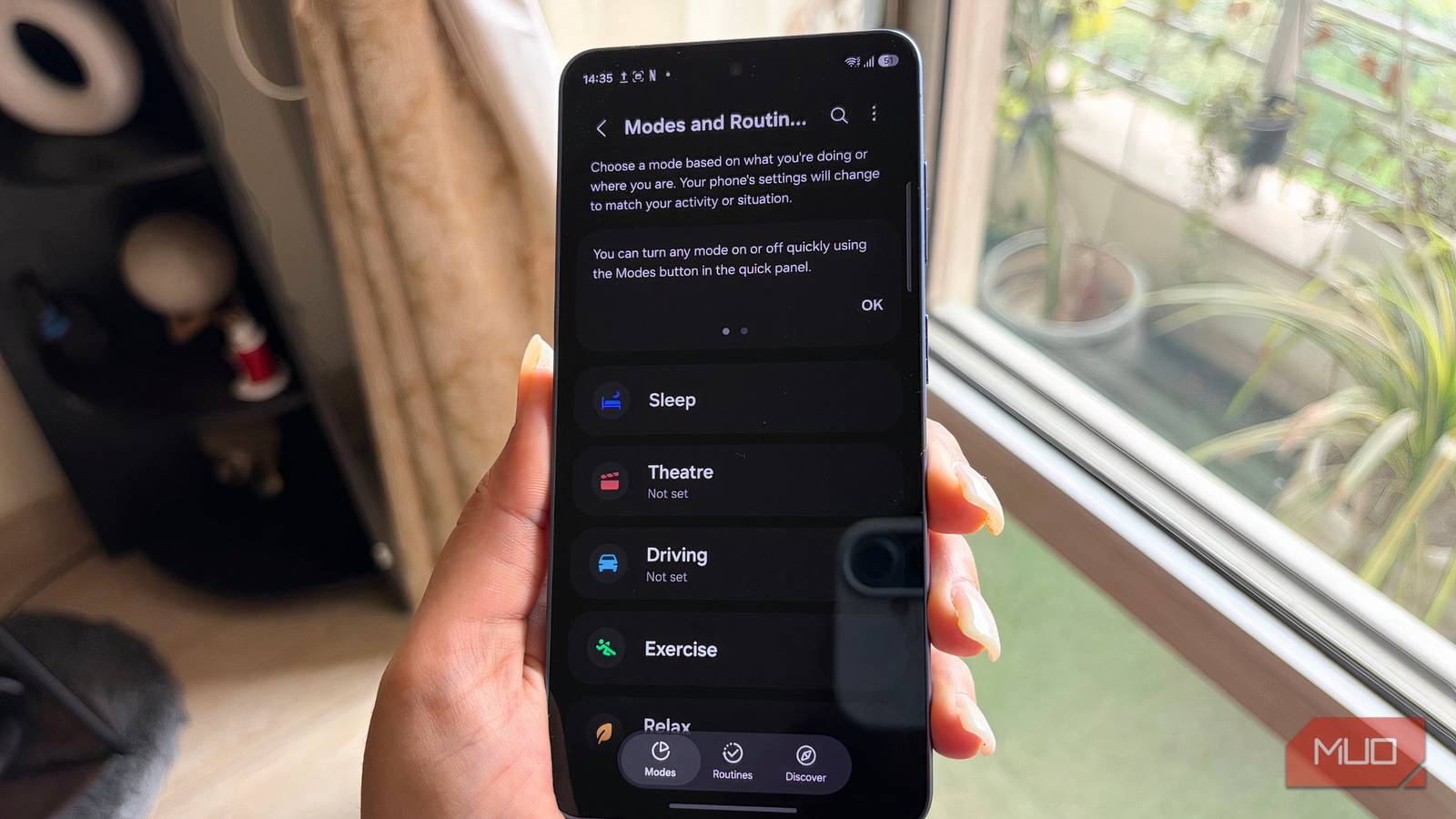
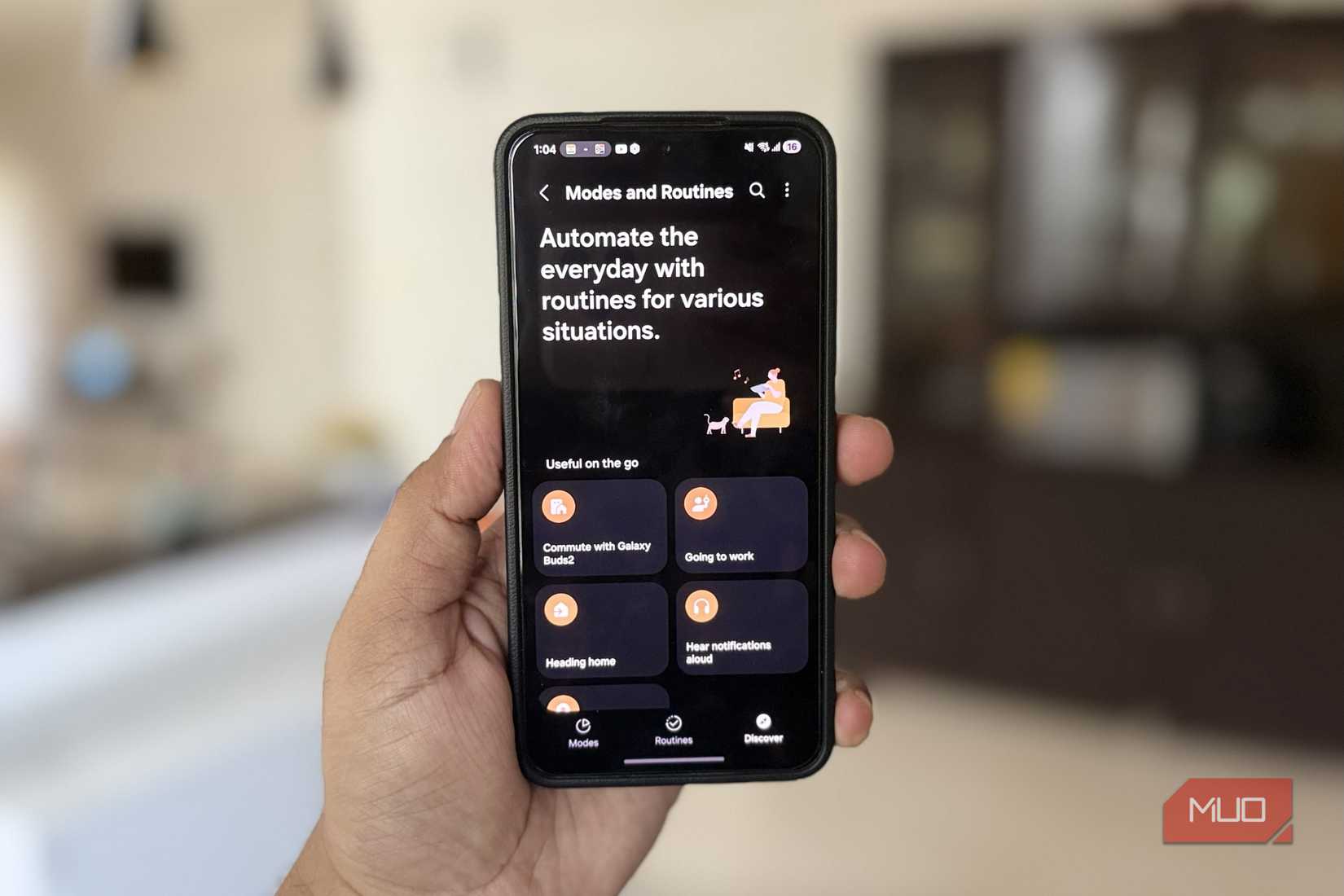
Trust me, Samsung’s modes and routines are additive and powerful once you start using them properly. Initially, I only use them for basic tasks like a bedtime routine that turned on Do Not Disturb and lowered brightness. Later on, I started relying on it far more than I expected.
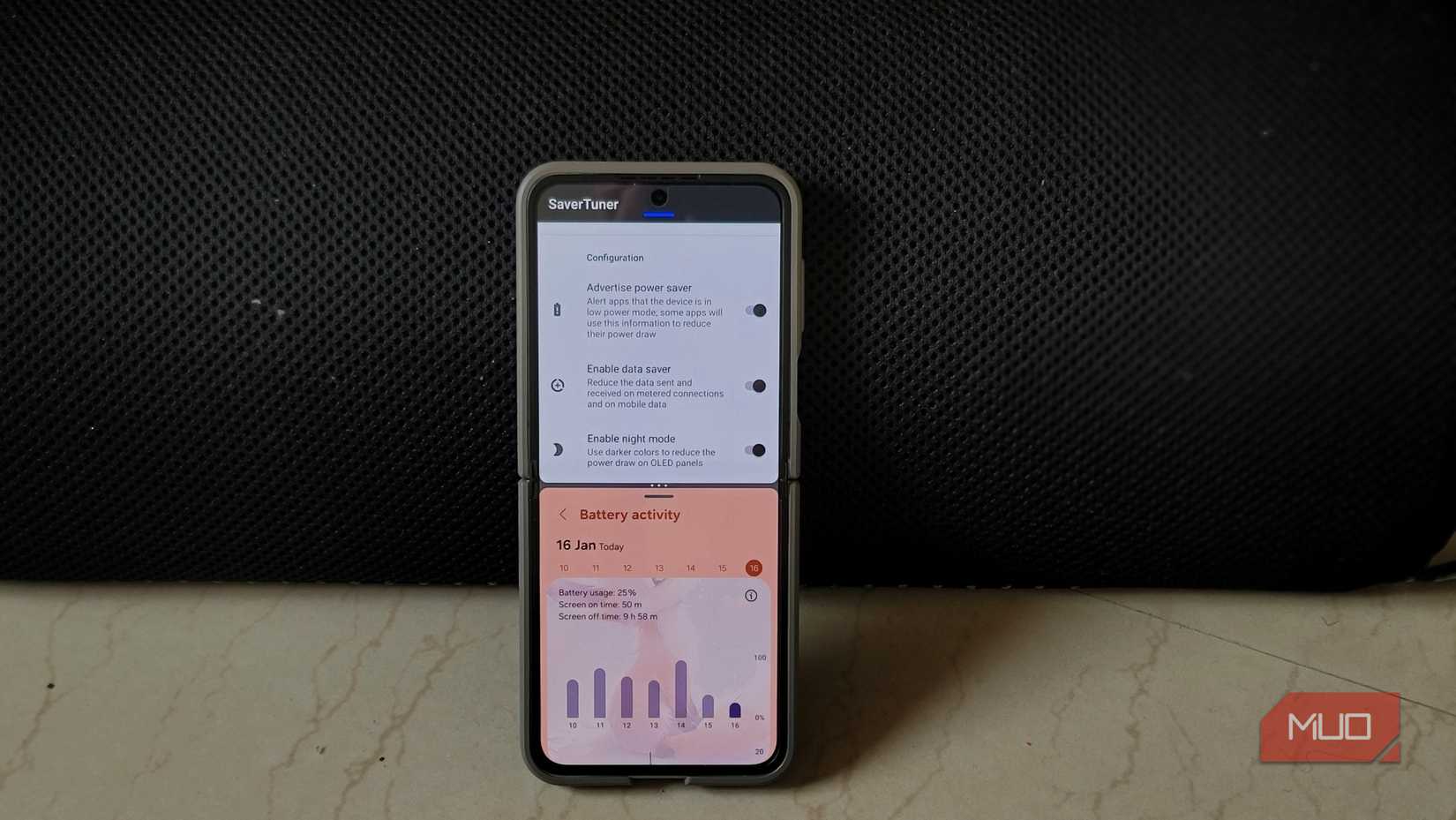
Now, my phone enables Wi-Fi as soon as I get home and launches Spotify as soon as I connect it to my car. Also, my phone automatically turns on power-saving mode when the battery drops to a certain level. These are just a few examples. Basically, my phone can handle everything for me based on my usage and habits. This saves time and reduces unnecessary friction in everyday tasks.
Most Android phones claim to offer a ton of customization options, and Samsung actually lives up to this promise with Good Lock. It’s a suite of customization apps that gives you the freedom to tweak everything from the lock screen and task switcher to gestures and themes. I downloaded this app out of curiosity, and now I can’t imagine using my Galaxy smartphone without it.
I used Good Lock to customize my recents app layout, redesign my lock screen, tweak system animations, and fine-tune multitasking controls. Some modules like Home Up, LockStar, Sound Assistant, and One Hand Operation+ have secured permanent spots on my phone. These Good Lock modules have helped me turn the standard Samsung interface into something that feels truly mine.
Honestly, I’m not a fan of AI tools, but this one is an exception. The Circle to Search feature is simple yet brilliant. Instead of copying text or switching apps, I can simply circle anything on my screen, like an image, a word, or even a product, and instantly search for it.
I constantly use Circle to Search when browsing social media and watching YouTube videos. Whether it’s identifying sneakers someone is wearing or finding a gadget in a thumbnail, Circle to Search comes in really handy. Earlier, I’d usually take screenshots, open Google Lens, crop images, and search for them manually. Now the process feels faster and easier. It enhances my experience, something that an AI tool should actually do.
This is one of the first features I disable on my phone. Samsung’s RAM Plus feature improves performance by using a portion of your device’s internal storage as virtual memory. It sounds impressive on paper. But in real life, I did not notice any benefit from this feature. In fact, it was doing more harm than good. It triggered occasional delays when I was switching between apps. As a result, my apps felt less responsive, especially when I’m multitasking.
When I turned it off, my phone became more responsive and consistent. If your phone has 8GB RAM or more, RAM Plus feels unnecessary. On the flip side, if you’ve got an older or lower-end Galaxy device, this feature might help in certain situations.
Many folks swear by Samsung’s Edge Panel for multitasking, but I’m not one of them. Edge Panel gives you quick access to apps, shortcuts, and tools from the side of the screen. I tried integrating them into my workflow, but did not find them useful.
I could already access most of the functions through gestures or the app drawer. Also, I often triggered the panel accidentally, which was quite annoying. This feature might make sense for heavy multitaskers, but it added more visual clutter and inconvenience in my everyday usage.
I don’t like seeing promotional notifications and unnecessary personalized recommendations all the time. I feel this can make an expensive smartphone feel cheaper. Samsung has improved over time, but it still shows you enough recommendation prompts, Galaxy Store ads, and marketing notifications that become irritating. As soon as you set up your phone, you start seeing subtle nudges everywhere.
Personally, I find it damn annoying. I make sure to go to Settings -> Samsung account -> Security and privacy, and disable Get news and special offers on email and mobile number and Improve personalized advertising toggles.
Samsung offers a mix of impressive features and experimental extras. You just have to know which ones enhance your everyday experience and which ones add noise. I always take a few minutes and customize my setup. This helps me transform my Samsung phone from a feature-packed device into a truly optimized one. For me, the freedom to choose what works best for you is one of the strongest suits of One UI.
About the Author