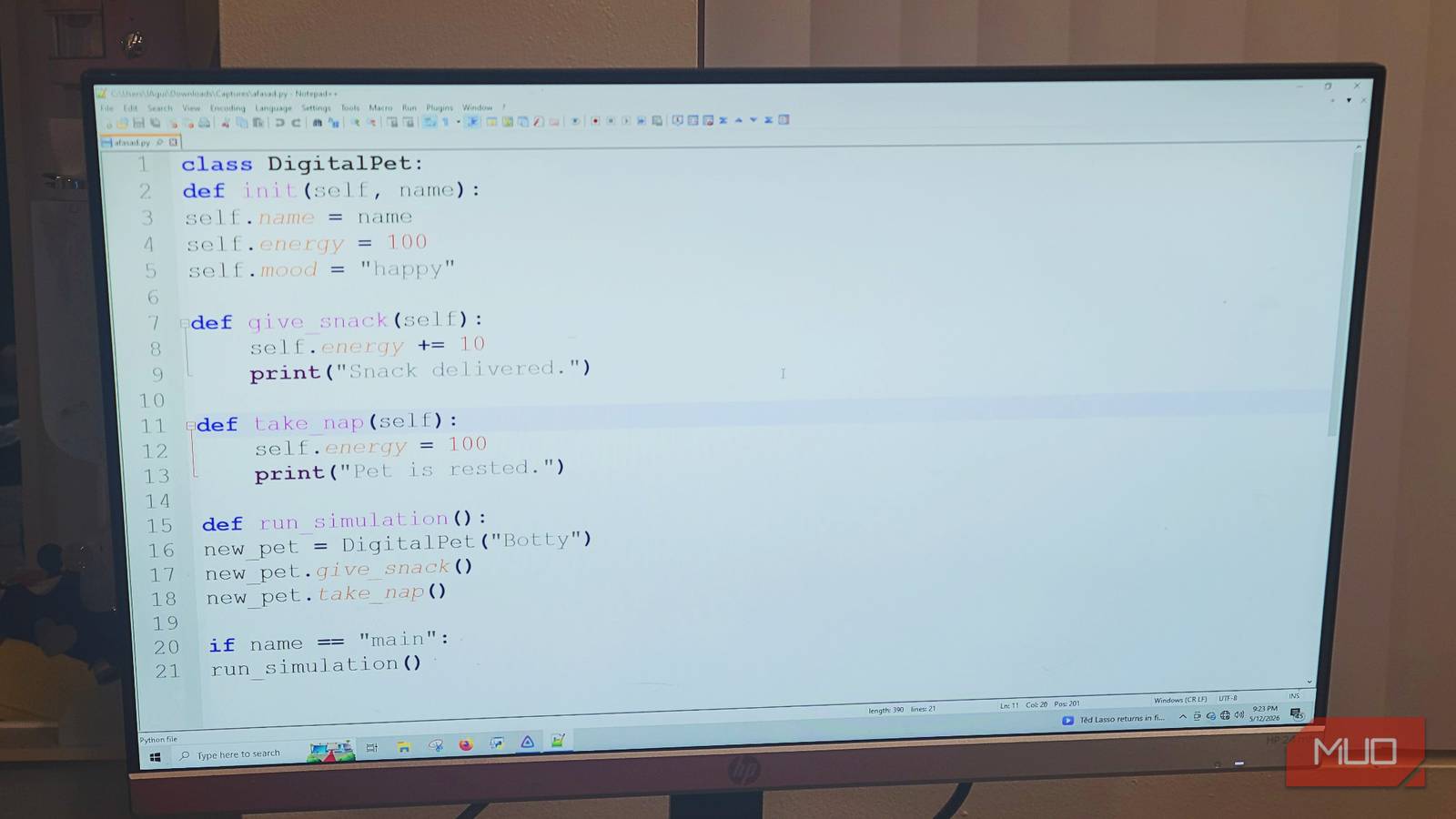
The topic I’ve used Notepad++ for years and just found features I didn’t know existed is currently the subject of lively discussion — readers and analysts are keeping a close eye on developments.
This is taking place in a dynamic environment: companies’ decisions and competitors’ reactions can quickly change the picture.
Notepad++ has been my go-to for plenty of things, programming included. I didn’t really do much with it outside the basics, though. Once I started to check out the different things I could do on Notepad++, I learned to love it even more. Before you replace Notepad++ with a new editor, try out these features.
A 6MB editor quietly replacing tools that cost ten times more.
You normally edit text in a straight, one-dimensional way, moving your cursor horizontally from a line’s start to its end. Notepad++ has a two-dimensional grid model called Column Mode instead, which lets you make vertical, rectangular block selections. This means that instead of only selecting text horizontally, you can highlight a specific column over many lines.
To use this feature, you just need to hold down the Alt key on your keyboard while left-clicking and dragging your mouse downward or upward over the text you want. As you drag, you’ll see a rectangular box forming, highlighting only the vertical slice of text you’re interested in. This technique works best for accurate alignment if you’re using a standard non-proportional, or monospaced, font. This may not be as cool as the plugins, but it is really helpful.
If you’d rather keep your hands on the keyboard, you can get the same vertical selection by holding down both the Alt and Shift keys. Then, you can use the directional arrow keys to make your highlighted block bigger. This is a great way to add or delete characters in the same position on every row without having to click each line separately.
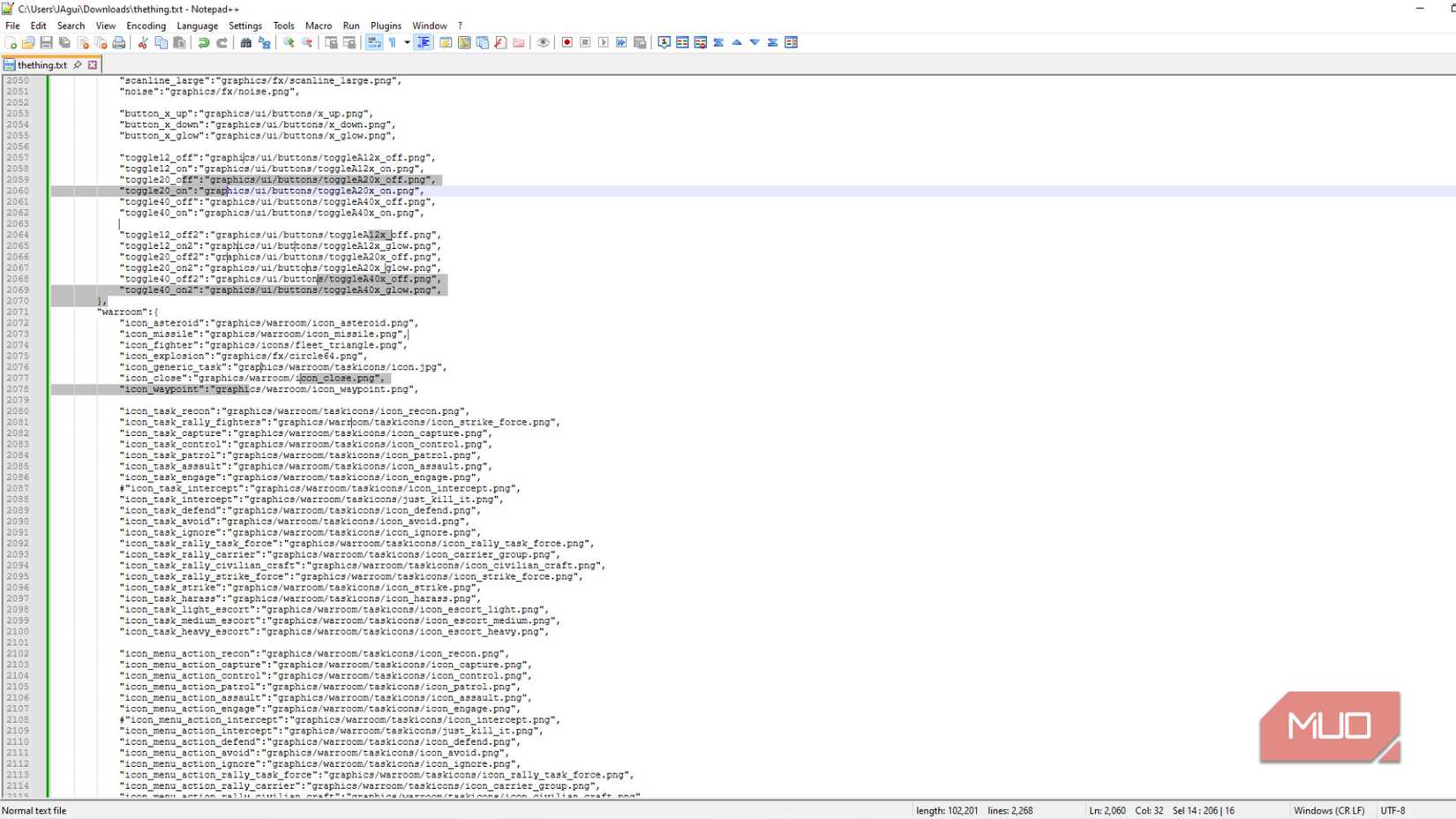
You probably know about the standard find-and-replace dialog, but multi-editing is much better. This is a lot like the plugin that lets you compare two files. The difference is that this lets you put your typing cursor in several different, non-contiguous spots in your document to type the same thing at once. You have to enable this in the app’s configuration. Depending on your version of Notepad++, you’ll need to go to the Settings menu, open Preferences, and look under either the “Editing” or “Editing 2” tab to find and check the box labeled “Enable Multi-Editing (Ctrl + Mouse click/selection)”.
Once you enable it, you can hold down the Ctrl key and click your mouse; you can drop another caret anywhere in your text. You aren’t limited to just placing single insertion points, either; you can hold the Ctrl key, click, and drag to highlight multiple different text selections at once.
If you accidentally click the wrong spot while setting up your multiple carets, recent updates let you easily remove a wrong caret or selection area by Ctrl-clicking that specific spot again, leaving your other active cursors intact. This gives you a lot of control over your document.
If you’ve scrolled through thousands of lines of code or gigabytes of server logs, you know you can get lost. Luckily, Notepad++ solves this with the Document Map feature. You turn it on by going to the View menu and picking Document Map, or by clicking the shortcut icon on the toolbar. This opens a side panel with a thumbnail view of the whole document.
This minimap uses a small font and works like a visual map of your file’s structure, and it usually sits on the right side of your editor. It lets you scroll through thousands of lines by clicking on the visual layout in the sidebar. This means you can jump to other parts of a large file just by dragging the highlighted rectangular block up and down.
Along with moving around quickly, this miniature view makes it much easier to see the structure of a large file at a glance without needing high zoom levels. So you can see and jump from the header section straight to the body just by recognizing the different shapes of the text blocks. For system administrators doing log file analysis, the Document Map is a big help. Visual patterns in the minimap, like a sudden change in text density, a different indentation, or a group of varied line lengths, can correspond directly to important system events or error blocks that need checking right away.
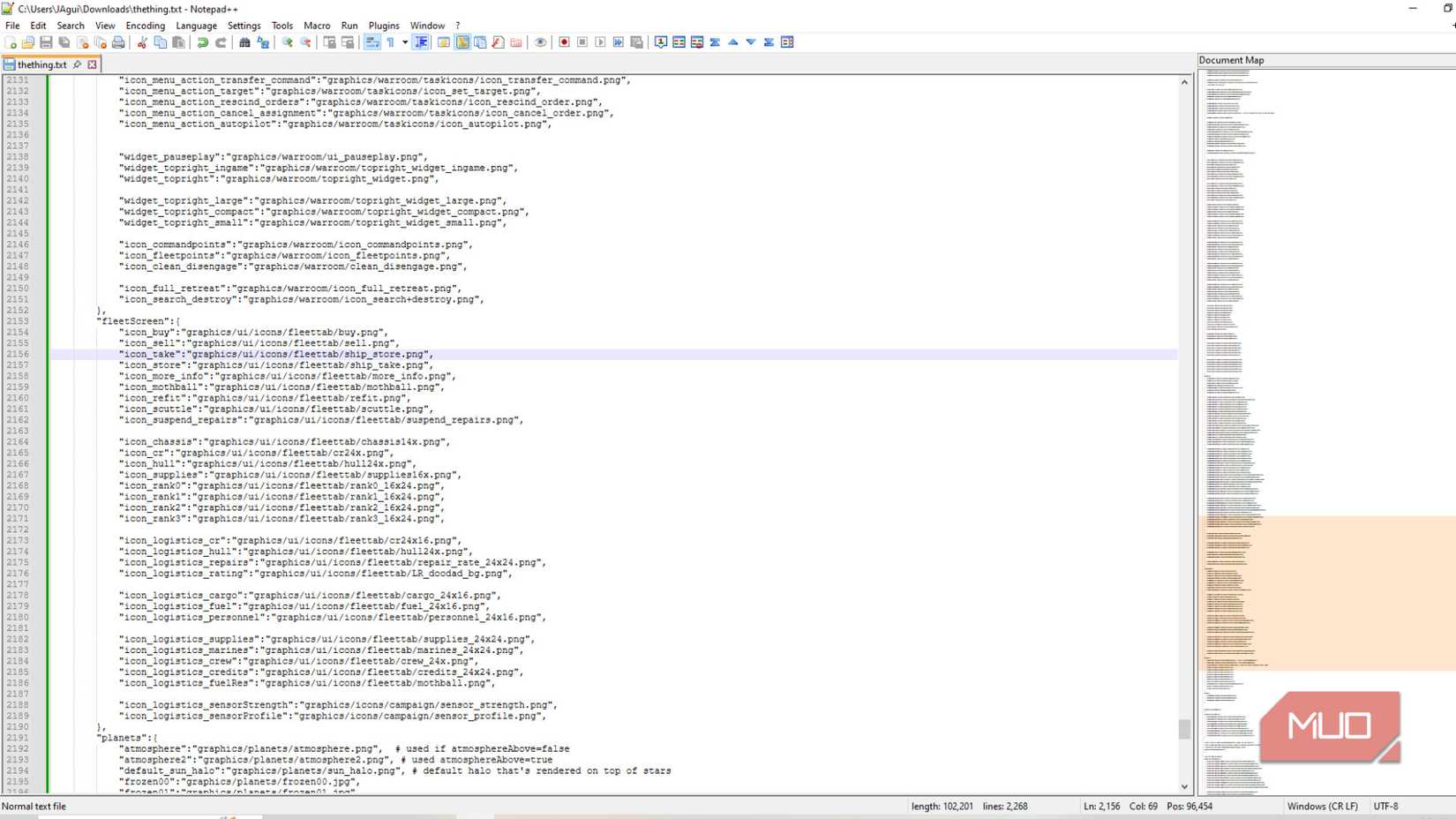
The Document Map works across open tabs, helping you preview structure in large files. This tiny view turns a big wall of text into an easy-to-understand, interactive structural map that keeps you oriented no matter how big the file gets.
If you work with text a lot, you’ve probably run into the chore of doing the same edits on hundreds or thousands of lines of data. Notepad++ has a macro recording engine that lets you capture a sequence of actions and repeat them easily. This built-in tool is made for recording keystrokes, cursor movements, and internal commands to play them back later.
You just select Start Recording from the Macro menu or the toolbar, do your manual edits, and then hit Stop Recording. This feature is great when you need to format long lists of data that all need the same specific changes. You might need to transform a big, raw list of ordered names into a comma-separated array in single quotes, or clean up thousands of lines of server log data to make a series of SQL INSERT statements.
Instead of manually typing these structural changes line by line, you can record your formatting actions on the very first line, using navigation keys like Home, End, and Ctrl-arrows to make sure the cursor moves correctly relative to the text. Then you can tell Notepad++ to automatically run that macro multiple times, or loop it continuously until it reaches the end of the file.
When source code files get to hundreds or thousands of lines, scrolling by hand really slows down your work and focus. The Function List panel will help a lot with this. This special area, which usually sits at the side of your main editing window, shows an organized list of all the functions, methods, and classes in your current document.
Instead of using the regular search or dragging the scrollbar to find a code block, you can just double-click any function name in the Function List panel, and the editor moves your cursor right to that part of the file. Sure, you can use the Ctrl+F tool, but it doesn’t always put the word front and center. This way, you go straight to where you need to be.
None of these features need plugins or extra setup. They’re already built into Notepad++ and ready to use the moment you need them. If you’ve been using Notepad++ for a while without touching any of these features, it’s worth spending an afternoon getting familiar with them. Otherwise, you are losing out on saving a lot of time.
Notepad++ is an open-source text and source code editor that serves as a powerful, feature-rich alternative to the default Windows Notepad.
About the Author